
Live Betting in an App: The Basics

Live betting is the feature that makes an application feel different from a printed coupon. Prices change while the event is running, and the number you see is a snapshot of an offer that will not wait. Understanding what those movements represent removes some of the drama without removing any of the uncertainty.
This article explains how in-play markets behave, why a price moves and what a moving price does and does not tell you. It is background rather than instruction, and it deliberately avoids suggesting that fast access to a moving number is an advantage of any kind.
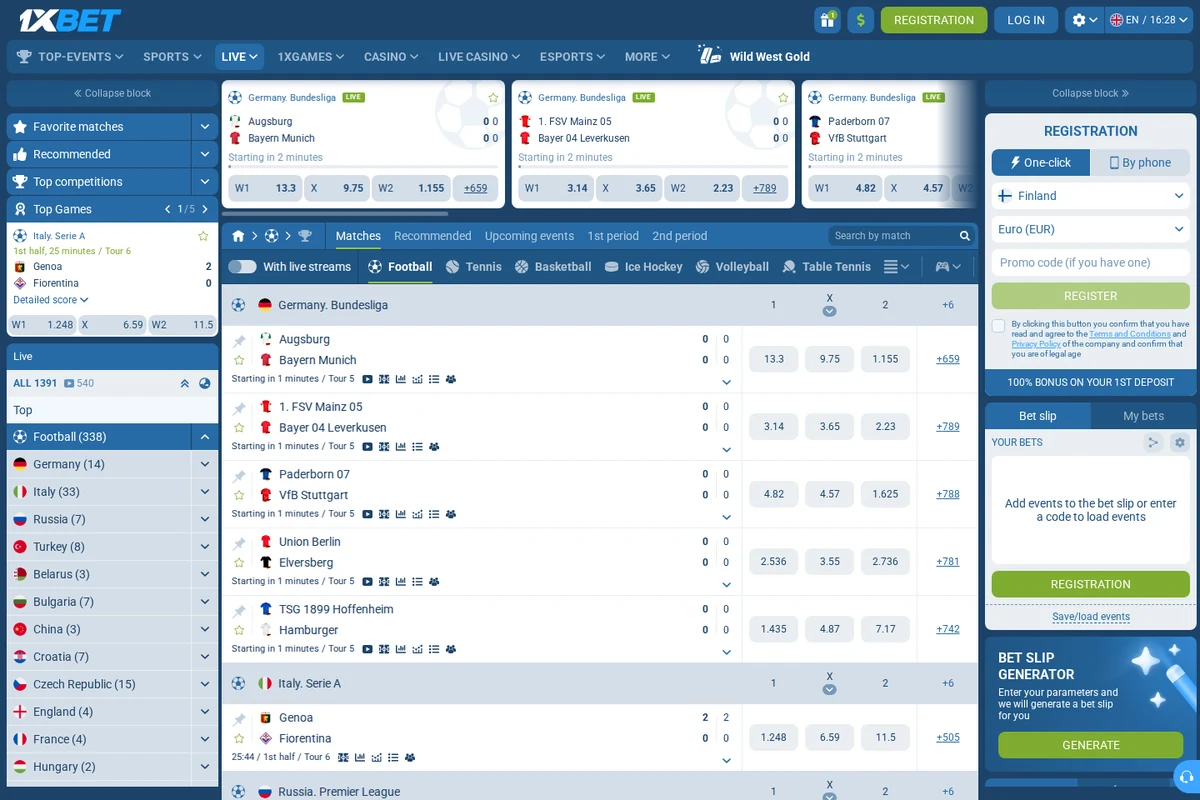
What makes live betting different
A pre-match price sits still for hours and invites consideration. A live price moves with the event, the volume of money behind it and the provider own assessment of the situation. The practical effect is that the same market can be reached at many different numbers during a single match.
Prices are set by the provider and move with demand rather than with truth. A number on a screen is an offer, not an opinion about what will happen, and treating it as a forecast is the most common conceptual mistake made by people new to betting markets of any kind.
Why prices move during an event
Movement reflects new information and new demand. A goal, an injury or a shift in momentum changes what is likely, and the price follows. So does the simple weight of money placed by other people. Neither mechanism is a prediction, and both are responses to what has already happened.
Convenience changes behaviour more than features do. An application that opens in two seconds is used differently from one that requires a password and a wait, and that difference is invisible in a feature list while being obvious in a monthly statement. Worth noticing, not worth moralising about.
- Treat a live price as a snapshot rather than a forecast.
- Notice that speed encourages fast and poorly considered decisions.
- Reduce notifications if they prompt impulsive actions.
- Set a session limit before the first live event.
- Expect prices to move without any change in the underlying truth.
The cost of acting quickly
Speed is the feature and the hazard at the same time. A price that will not wait encourages decisions made in seconds, and decisions made in seconds are rarely the ones a person would have chosen after a minute of thought. Noticing that trade-off is more useful than trying to outrun it.
The gap between a decision made calmly and a decision made quickly is where most avoidable losses live. Anything that slows a process down slightly, without preventing it, tends to improve the quality of what follows. This is as true of placing a bet as it is of any other purchase made from a phone.
Reading a market without overreading it
A market price summarises what many participants collectively believe at a moment, weighted by the money behind those beliefs. That is genuinely interesting and frequently misleading, because a consensus is not a fact and can be wrong in both directions without anyone being deceived.
Reading the conditions of anything is dull work that pays for itself within a week. Bonuses, verification requirements and withdrawal rules all describe the relationship between you and the provider, and all of them are easier to accept when met in advance than when discovered at a payment desk.
| Live feature | What it does | What it does not do |
|---|---|---|
| Moving prices | Reflect new information and demand | Predict the outcome of the event |
| Fast placement | Shortens the time to decide | Improve the quality of the decision |
| Live alerts | Bring a market to your attention | Make acting on it a good idea |
The role of notifications
Live betting and notifications are a difficult combination, because an alert that arrives during an event is precisely the interruption that produces an impulsive action. Many applications allow alerts to be narrowed or switched off entirely, and a quiet application is easier to use deliberately.
Security advice tends to focus on exotic threats while the ordinary ones do the damage. A convincing copy of a familiar page, a message that creates urgency and a password reused across services account for far more lost accounts than any sophisticated technique, and all three are defeated by habits rather than tools.
Keeping a live session bounded
A live session has no natural end, which is why a time limit matters more here than anywhere else in the product. Setting a session length before the first event and respecting it when the prompt appears is the simplest way to keep an evening from becoming a night.
Nobody can honestly promise an outcome on an uncertain event, and the language of guaranteed returns belongs to sales material rather than to anything mathematical. The useful question is never how to be certain, because certainty is unavailable, but how to keep the activity bounded and enjoyable once it is accepted as uncertain.
Live betting is a faster version of the same uncertain activity, with a price that moves instead of waiting. Understanding why it moves reduces the sense of urgency without reducing the risk. No market in play can be made certain, and no access method changes an outcome. This article is informational, intended for adults aged 18 and over, and it encourages nobody to bet.
Read next
Sports Markets Explained Without the Jargon
Singles, multiples and handicaps described plainly, with the risk differences spelled out.
Practical Tips for Betting on a Phone
Battery, connectivity and screen size: small things that change the experience.
App or Browser: Which One Fits You
Installation, notifications, speed and storage compared in everyday terms.